World Prematurity Day – why it matters
Premature birth – challenges and hope
Share post
Every year, on 17 November, the world marks World Prematurity Day – a day dedicated to little fighters, their parents, and neonatal specialists who work tirelessly for every breath and every gram of progress.
This day is an opportunity to remind us of the importance of early, continuous, and family-centred support, as well as investment in modern equipment, knowledge, and practices that save lives.
UNICEF hosts a wide community of over 50,000 donors, companies, and individuals has, for years, been helping maternity wards and neonatal units across Serbia obtain what they need to provide the best possible care for every newborn.
World Prematurity Day – why it matters
World Prematurity Day draws public attention to the challenges faced by premature babies and their families, as well as to the progress brought by investments in neonatology.
Marking this day helps amplify the voices of professionals and parents, highlights the importance of care standards and equipment availability, and encourages the community to recognize its role in supporting the smallest fighters.
Origins and significance of World Prematurity Day
World Prematurity Day was first initiated in 2008 by the European Foundation for the Care of Newborn Infants (EFCNI) and European parent organizations, while it has been celebrated globally under its current name, World Prematurity Day, since 2011.
Observed worldwide on 17 November, it has grown into a global movement of solidarity with the most vulnerable newborns who face the greatest challenges at the very beginning of life.
The essence of this day lies in raising awareness and sharing good practices – from family-centred care and skin-to-skin contact to continuous investment in equipment and staff training.
In Serbia, this day further motivates citizens, companies, and partners to support hospitals and neonatal teams, as each device, every training session, and every hour of professional development contributes to better outcomes and faster recovery for every premature baby.
This creates a broader social impact – a safer start to life and fewer long-term consequences for the health and development of both the child and the entire family.
The message and symbolism of the colour purple
Purple is the global symbol of World Prematurity Day – representing courage, compassion, and hope. When cities, hospitals, and institutions light up in purple, they send a clear message of support to our smallest but mightiest fighters and their families.
This visual symbol brings the community together, reminds us of the importance of empathy and collective action, and invites everyone to contribute through concrete acts – donating, volunteering, or sharing verified information to help improve care for premature babies.
Premature birth – challenges and hope
Premature birth brings medical, emotional, and logistical challenges for the entire family. At the same time, advances in neonatology and family-oriented models of care enable increasingly better outcomes – from stabilising the most vulnerable newborns to earlier bonding with parents through skin-to-skin contact and other shared practices that foster emotional and physical connection.
Timely, high-quality, and accessible support makes the difference between uncertainty and recovery.
What does it mean when a baby is born prematurely?
Premature birth refers to the arrival of a baby before the 37th week of pregnancy.
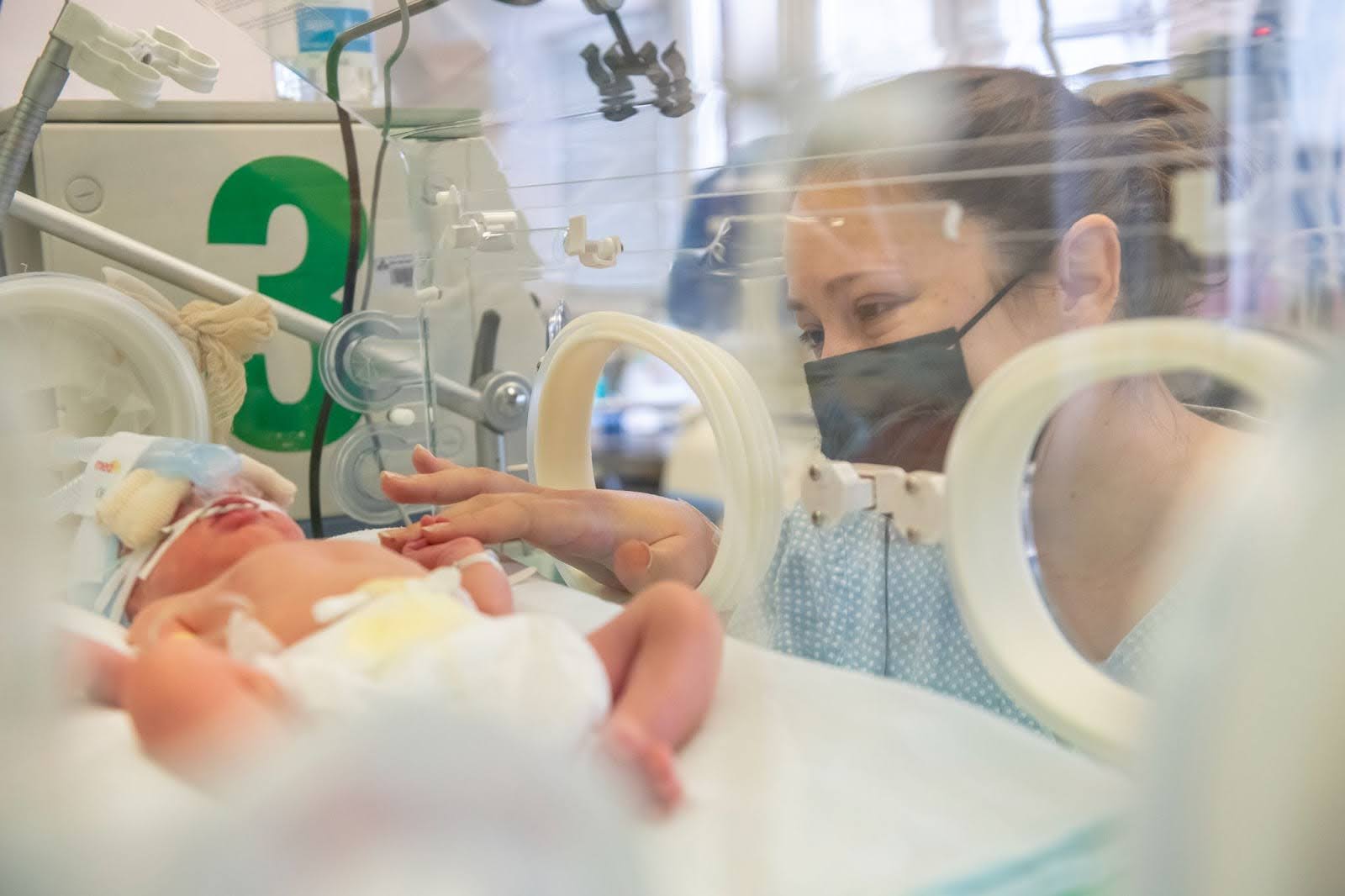
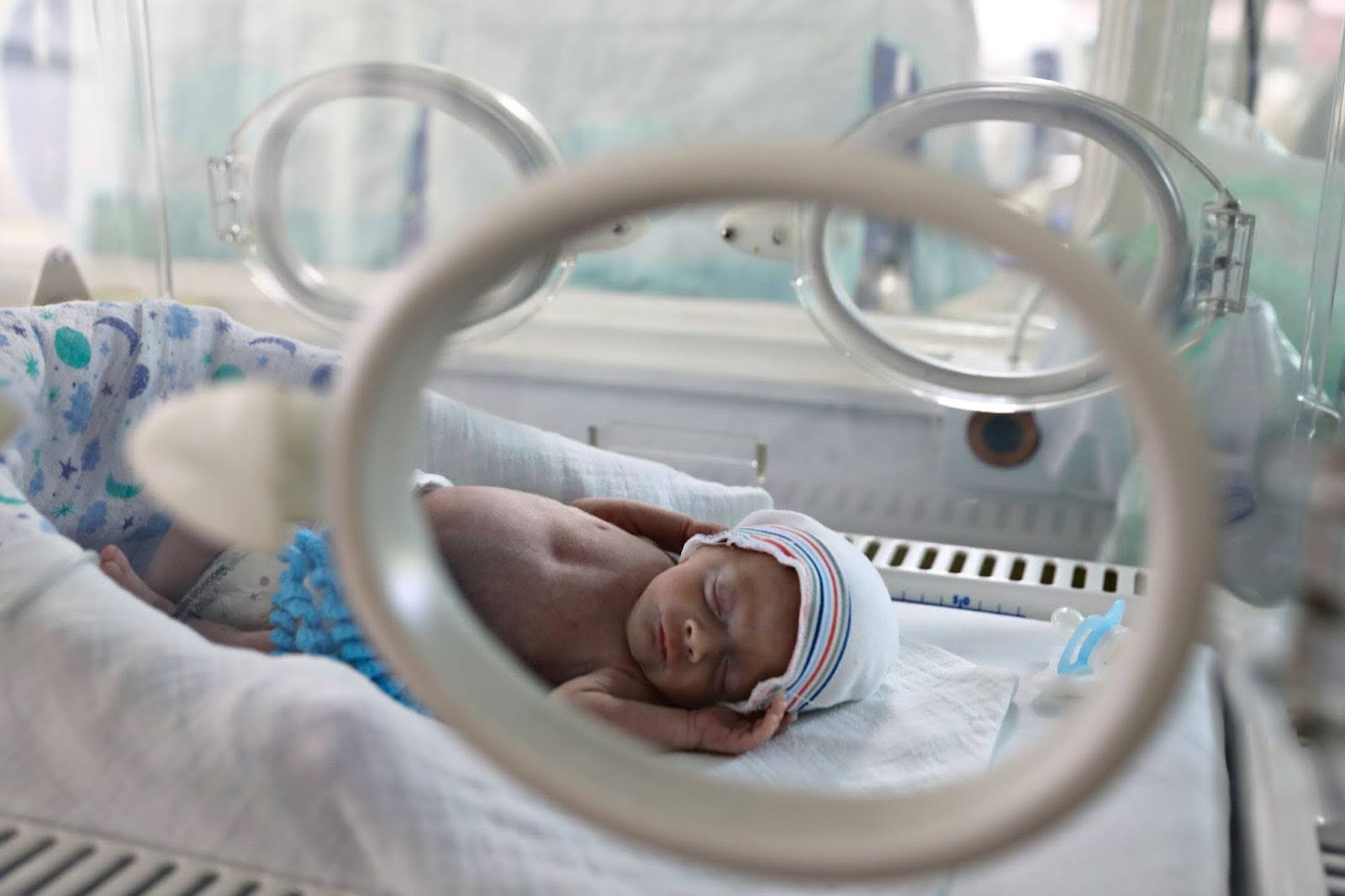
In practice, this often means the newborn requires intensive and continuous medical support – including assisted breathing, temperature regulation, monitoring of vital functions, feeding, and infection prevention.
In neonatal intensive care units, evidence-based protocols and practices are implemented using equipment such as:
- incubators
- non-invasive ventilation devices
- specialised mobile X-ray machines for babies
- warming tables
- monitors
- specialised equipment for safe transport
- phototherapy lamps and other devices
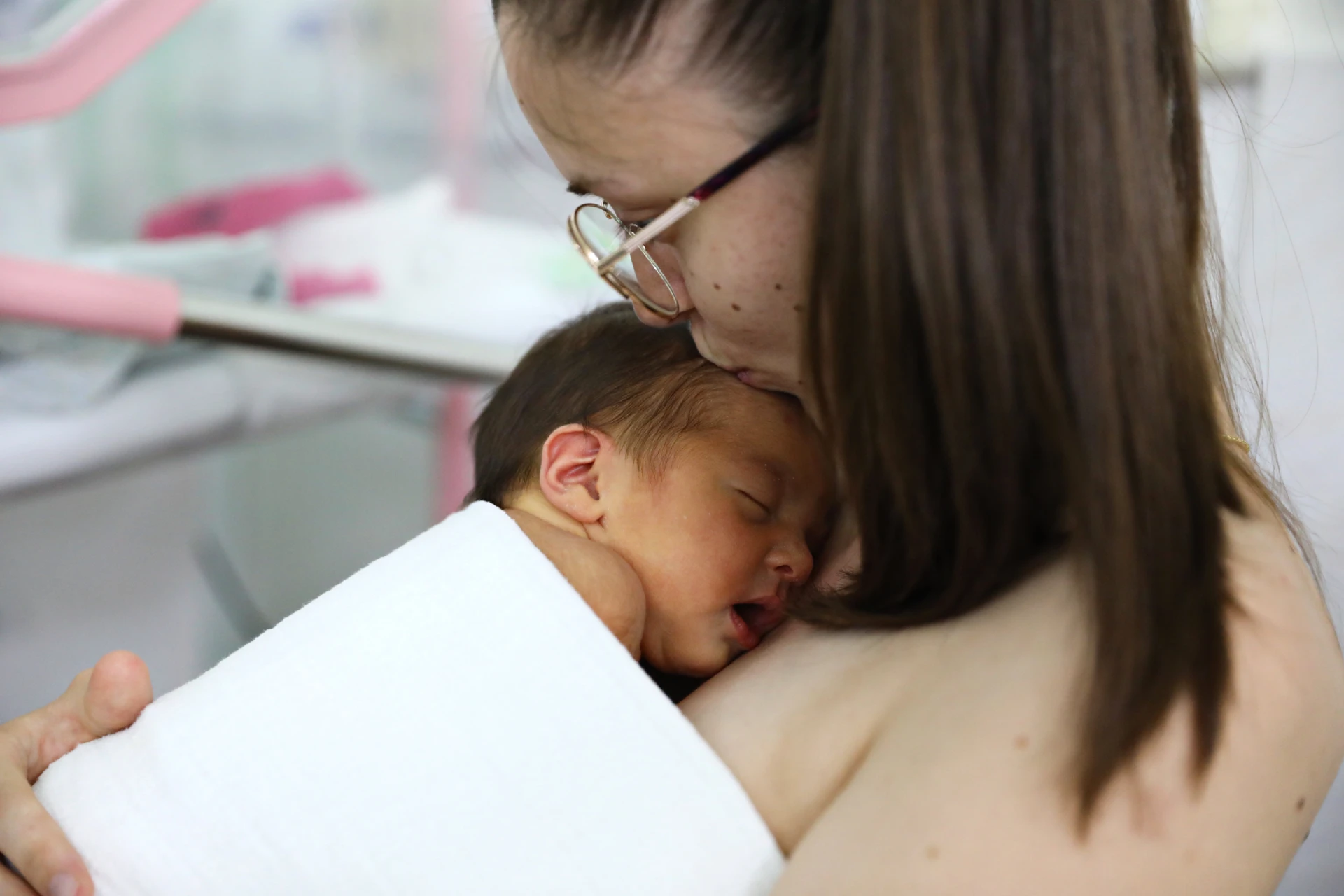
A special place belongs to family-centred developmental care and skin-to-skin contact (known as kangaroo care), which stabilises vital functions, supports breastfeeding, and strengthens the emotional bond between parent and child.
For this type of care, equipment is not the key – the presence of parents is.
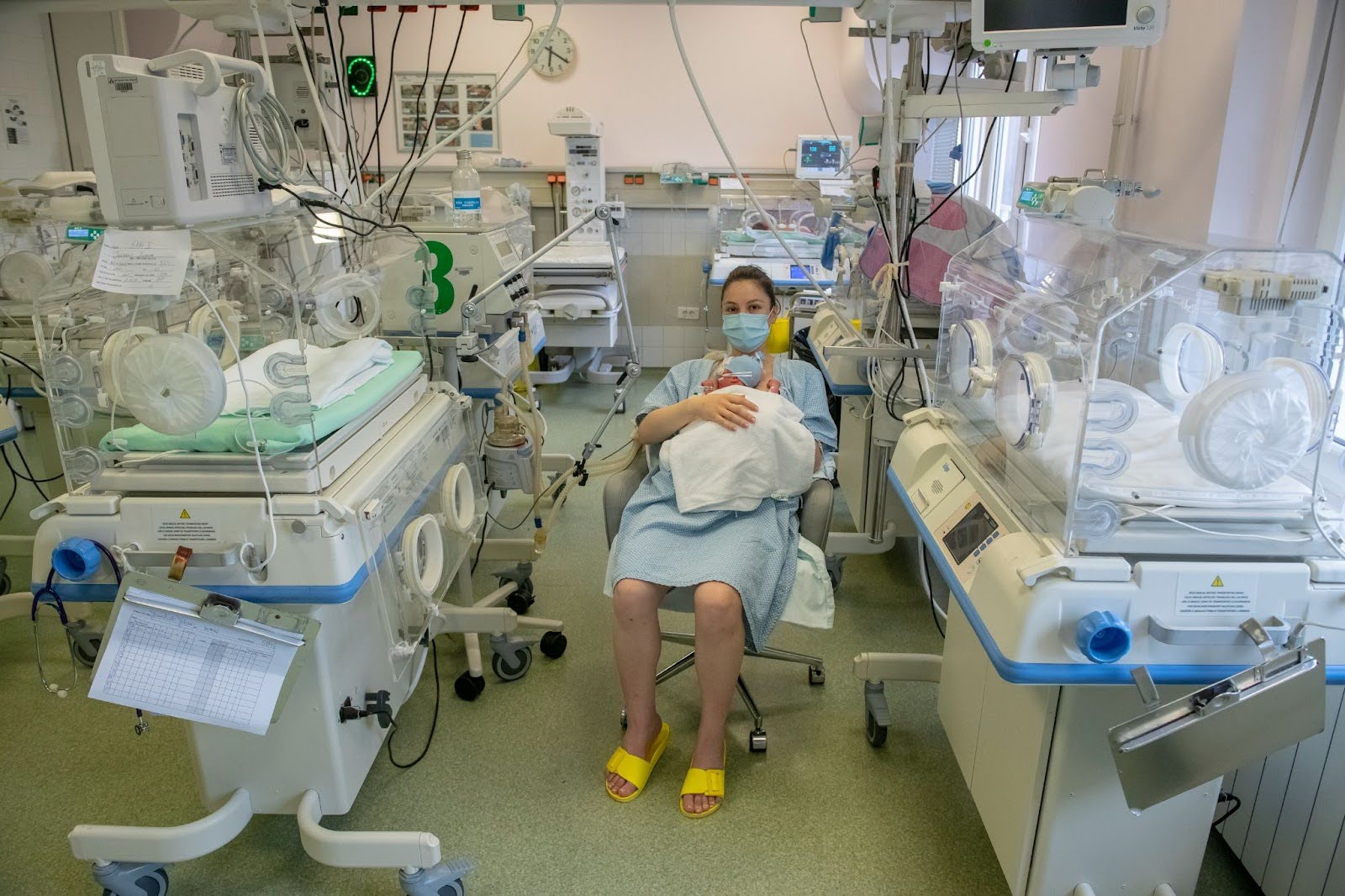
That is why in modern neonatal units, every incubator is accompanied by a chair enabling skin-to-skin contact between parent and baby, as a parent’s presence, voice, and touch are essential for the baby’s emotional and overall development.
With the help of incubators and developmental care practices (for example, nesting positions, soft fabric “hugs” carrying the mother’s scent, controlled noise levels, and incubator covers that regulate light intensity and rhythm), the baby grows and develops in conditions that simulate the mother’s womb.
UNICEF in Serbia, with support from individual and corporate donors, has for years been helping equip neonatal care units across the country.
Thanks to modern approaches and continuous professional empowerment, more premature babies are taking stronger steps towards home and healthy development.
Health and emotional challenges for families
Staying in a neonatal unit is an intense and emotionally demanding period for parents: uncertainty, fear, and exhaustion often accompany days filled with treatment and recovery.
What parents need most is informed, empathetic communication with the medical team and the ability to be constantly present and involved in the care of their baby.
Family-centred approaches — including skin-to-skin contact, breastfeeding support, and parent education — help reduce stress and strengthen confidence in the parental role.
Scientific evidence shows that these activities are directly linked to recovery, health, and overall development of each child.
After discharge, families benefit from continued support through early interventions in the community and connections with local services and support groups.
How Serbia marks World Prematurity Day
In Serbia, World Prematurity Day is observed through joint activities by hospitals, parent associations, local authorities, companies, and partners.
Symbolic purple-lighting of buildings, open days in maternity wards and neonatal units, expert consultations, and media campaigns all contribute to raising awareness about the challenges and needs of “little fighters” and their families.
Activities of hospitals, parent associations, and partners
Supporting premature babies is a team effort and a shared responsibility of the entire society.
That is why everyone who can contribute — healthcare institutions, parents, organisations, and communities — plays a part in ensuring the best possible care.
- Organise informational sessions and counselling for parents
- Collect donations for modern equipment
- Promote awareness of family-centred developmental care
Parent associations:
- Share personal experiences to encourage other families
- Provide psychosocial support to parents whose babies are currently hospitalised in neonatal units
Partners from the private sector and local governments:
- Finance the procurement of medical and other equipment
- Participate in improving conditions in neonatal departments
UNICEF in Serbia, thanks to regular monthly donations from individuals and partner support, has so far:
- Donated incubators, respirators, resuscitation and warming tables multiple times
- Provided armchairs for skin-to-skin contact
- Helped equip hospitals with mobile X-ray devices
- Donated one of only two human milk pasteurisers in Serbia
- Supplied numerous other medical devices to neonatal units across the country
Such cooperation creates a sustainable framework in which every contribution — from a single chair for skin-to-skin contact to a modern incubator — brings real, everyday improvements in the practice of neonatal intensive care and contributes to the faster recovery of the most vulnerable newborns.
The importance of public events and raising awareness
Public events and media campaigns play a crucial role in connecting communities with hospitals and professionals. When citizens understand what it means to be a “little fighter”, they are more willing to support programmes and initiatives aimed at improving neonatology. Messages based on empathy, scientific evidence, and transparent reporting of results further strengthen trust and motivate donors to continue their support.
The role of the community and family support
Support for premature babies is the work of the entire community — from professionals and hospitals to associations, institutions, individuals, and companies.
When the community understands the needs and sees a clear link between donations and tangible outcomes, we grow as a society where every baby has a fair chance.
UNICEF’s support programmes for the youngest
In recent years, UNICEF has invested nearly one million dollars in improving neonatal care in Serbia. In partnership with healthcare institutions and donors, UNICEF continues to strengthen neonatology in the country — from advancing family-centred care and skin-to-skin contact, to supplying intensive care equipment and training medical staff.
Special importance is given to partnership donations and targeted campaigns aimed at equipping neonatal intensive care units, as well as support for institutions such as the Institute of Neonatology in Belgrade and neonatal intensive care units in Belgrade, Niš, Kragujevac, and Novi Sad.
These efforts help shorten hospital stays where safe, improve the quality of care, and create conditions for better developmental outcomes for every child.
Your donation via the UNICEF website helps ensure that every baby gets the best possible start in life.
Conclusion
World Prematurity Day reminds us how much every community can do for premature babies — little fighters who need our help — from family support to donations and investments in neonatal units and professionals.
When expertise, empathy, and donor solidarity come together, we can implement practices that ensure a safer start in life and better long-term outcomes.
Join us: your donation today can provide the equipment, training, and support that change a life tomorrow.